
A custom business app is software built around a company's own tasks, people, and decisions. It might organize technician schedules, manage requests, or give a manager a clear approval process. Many of these applications run in a web browser, so staff can use them on a computer or phone without installing a separate mobile app.
The value comes from how closely the software fits the work. Your team can have the screens, permissions, and steps it needs, with room to improve them as the business changes.
When the workarounds become part of the job
Many businesses start with a spreadsheet, a shared calendar, or a subscription tool. Those can be good choices. The friction appears when staff have to keep explaining the parts the software does not handle.
Someone maintains a second spreadsheet because the main system cannot show the right information. A manager sends a separate message to explain whether a schedule is final. Staff copy the same details between tools because the handoff happens outside the application.
If those workarounds are frequent, they are worth examining. A custom application can bring the important steps into one process that reflects how your company operates.
A real example: a technician scheduling application
VAHZOR built a scheduling application for a rehabilitation clinic. Administrators prepare the week, a director reviews it, and staff see the approved schedule.
When a posted week needs a change, the revision goes back through approval while the current approved copy remains visible to staff. Availability and time off are checked against assignments as the schedule is built.
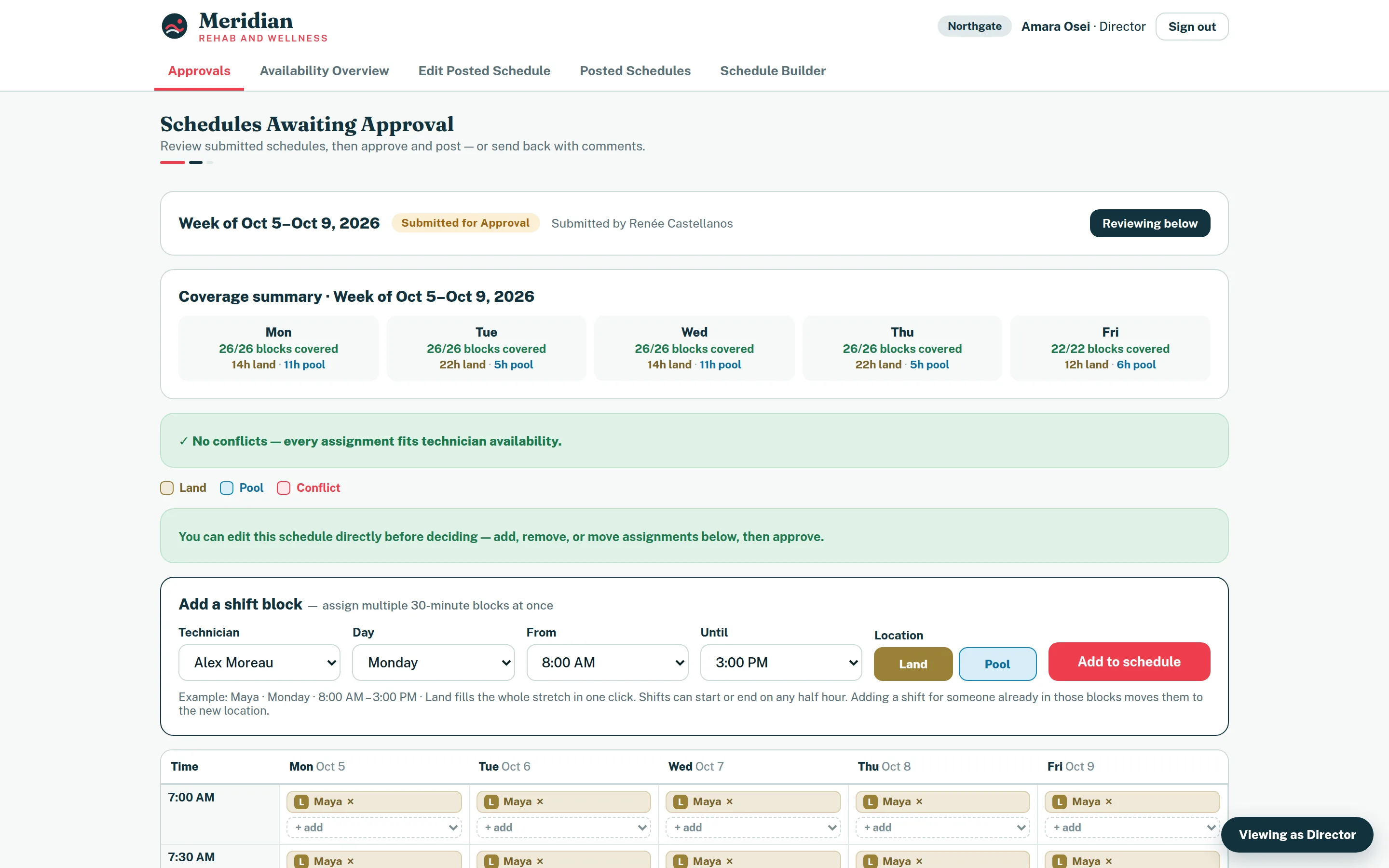
Those details address how this clinic manages its week. You can explore the clinic scheduling case study and demo; its clinic identity and staff data are fictional to protect the real client.
What can be tailored to your company?
Customization can reach beyond the colors and company logo. It can shape the decisions people make every day.
| Part of the work | What a custom app can reflect |
|---|---|
| Roles | What each person can view, change, or approve |
| Workflow | The order work follows and who receives it next |
| Information | The fields and views people actually need to do the job |
| Terminology | The names your team already uses for its work |
| Reporting | The questions a manager needs the system to answer |
The goal is to make the right action easy to understand. Adding every possible feature can make a small system harder to use, so the scope should start with the work that matters most.
Improvements can follow your team's feedback
One of the strongest reasons to choose a custom application is the relationship after launch.
A widely marketed product has to balance requests across its customer base. Your request may compete with features that matter more to other organizations. Some providers offer extensive configuration and customer-specific work, but those options vary.
With a VAHZOR-built application, your company can discuss improvements directly with the person maintaining the system. An update can be worthwhile because it solves a problem for your team.
For example, a company might need a clearer weekly summary, an additional review step, or a different way to organize a growing team. These are examples of possible future requests, not claims about features already delivered to the clinic.
The process starts with the problem: what is happening, who is affected, and what would make the task easier? VAHZOR can then agree on the change, its cost and timing, test it, and release it. Maintenance and new feature development should be defined clearly in the support agreement.
That creates a practical way for the application to evolve as the people using it learn what they need.
When an existing product is the better choice
A ready-made application may already do the job well. It can offer a quicker start, predictable subscriptions, and features that would be unnecessary to rebuild.
Custom development deserves consideration when an important workflow remains awkward after reasonable configuration, or when the business repeatedly pays for that mismatch in manual effort and confusion.
Compare the full commitment on both sides. For custom software, include development, hosting, maintenance, support, and future improvements. For an existing product, include the subscription, setup, integrations, and work your team still performs outside it.
Start with one process
You do not need to arrive with a technical specification. Bring a real example of the task you want to improve:
- Who starts the work, and who uses the result?
- Which decisions need approval?
- Where do people repeat work or ask for clarification?
- What information should each person be allowed to see?
- What happens when the plan changes?
- How would you know the new process is working better?
Before a build begins, also agree on data access, exports, backups, ownership, and ongoing support. Those decisions help make the application useful over the long term.
VAHZOR is based in Stafford, Virginia, and works with businesses locally and nationwide. If your company has a process that keeps bending around its software, tell us how it works today. We can help identify whether configuration, a connection between existing tools, or a custom application is the right next step.